Cambodia
Tourism Travel Guide And Tips

Exploring Banteay Chhmar: Cambodia's Serene Temple Complex
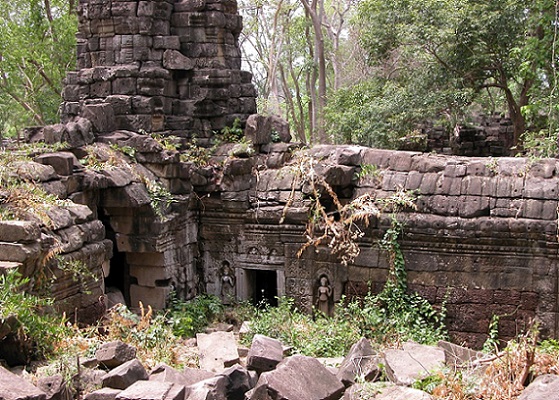
Banteay Chhmar, a remote 12th-century temple complex in northwest Cambodia, offers a profound and uncrowded alternative to the popular sites of Angkor.
Often called the "perfect antidote" to the crowds of Angkor Wat, this temple allows you to explore massive ruins, intricate bas-reliefs, and serene landscapes where you may be the only visitor in sight.
Here is an essential guide for experiencing this remarkable destination.
A Temple with a Purpose
Banteay Chhmar was built by King Jayavarman VII in the late 12th to early 13th century, at the height of the Khmer Empire. Its original name, translating to "small citadel," belies its massive scale, which was once second only to Angkor Thom. It is believed the temple was constructed as a tribute to the king's son and four generals who died in battle.
The site is one of only two places outside Angkor that feature the enigmatic smiling face towers reminiscent of the Bayon temple, believed to represent the compassionate bodhisattva Avalokiteshvara. Its sprawling layout, covering several square kilometers, includes a vast moat and network of reservoirs (barays) designed to manage water in the arid region.
The Unforgettable Experience
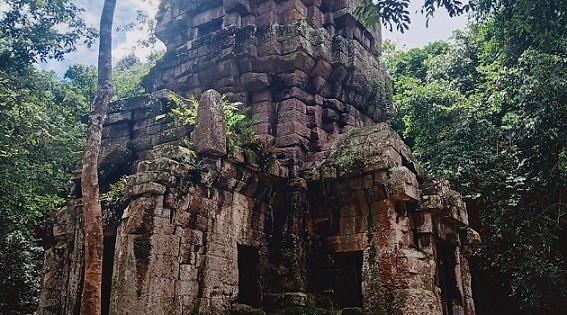
What truly sets Banteay Chhmar apart is its atmosphere. Here, the story of the jungle reclaiming the stone isn't a staged photo-op, it's the natural state of the temple.
Archaeological Adventure: Unlike the extensively restored and managed sites at Angkor, Banteay Chhmar is partially in ruins, with trees growing from its towers and fallen sandstone blocks creating a "Tomb Raider" feel. Visitors often have the site entirely to themselves, allowing for quiet contemplation of its beauty.
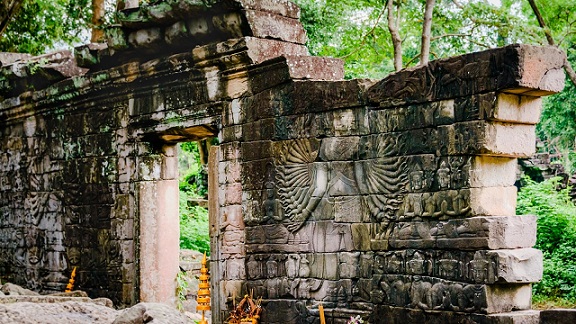
Exceptional Bas-Reliefs: The temple boasts some of the most spectacular bas-reliefs in Khmer art, stretching for nearly a kilometer. They vividly depict scenes from royal life, great military victories, and everyday activities of the Angkorian period. Notably, because it was far from the political center, its Buddhist iconography largely escaped the destruction that occurred at other temples.
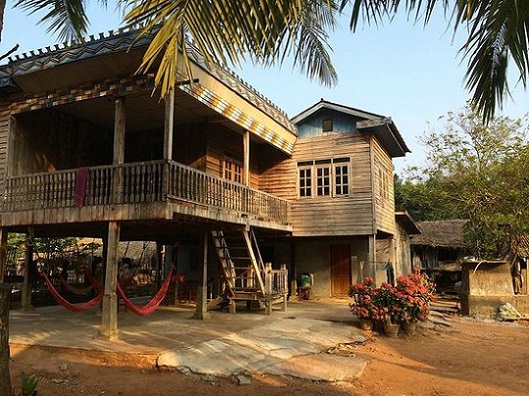
Community-Based Tourism (CBT): Since 2007, the local community has run a successful tourism initiative to protect their heritage and share their lives. The best way to experience Banteay Chhmar is by engaging with the CBT, which coordinates homestays, meals, guides, and authentic local activities.
How to Plan Your Visit
Getting There
The journey is part of the adventure. Banteay Chhmar is located about 170 km from Siem Reap (a 3-4 hour drive). The most common route is to take a bus or taxi to the provincial town of Sisophon, 65 km to the south. From Sisophon's Psaar Thmei market, shared taxis run up Highway 56 to the temple village (approximately a 1-hour drive).
It's highly recommended to stay overnight. A day trip from Siem Reap is possible but very long. The Banteay Chhmar CBT can help arrange your entire journey, from private transport to guides.
What to Do
A stay of two to three nights is ideal to immerse yourself fully.
Explore the Main Temple: Spend at least half a day. A local guide (available for about $15/day) is invaluable for understanding the complex history and stories in the carvings.
Visit Satellite Temples: Rent a bicycle ($1.50/day) or take an ox-cart tour to seek out smaller satellite temples like Ta Prohm and Samnang Tasok, hidden in the forest.
Local Activities: Enjoy a traditional music performance, visit the Soieries du Mekong silk weaving centre, or join the locals for a picnic by one of the ancient reservoirs.
Volunteer: While direct restoration is for professionals, you can contribute by cleaning stones or removing debris at the site.
Where to Stay and Eat
There are no hotels. The best experience is a CBT homestay with a local family. You will get a simple, clean private room with a fan and mosquito net for under $10 per night. This is a genuine opportunity to experience Khmer family life.
Meals are served at the homestay or the CBT office. For a truly unique experience, you can arrange a candlelit dinner inside the temple complex itself.
Practical Tips
When to Go: The dry season (November-April) is best for exploring. The wet season (May-October) is lush and green but roads can be muddy.
Money: Bring enough cash (US dollars are widely accepted). There is no ATM in Banteay Chhmar; the nearest ones are in Sisophon.
Temple Pass: A multi-day entry pass for all temples costs $5 per adult (children under 12 are free).
Preparation: Pack sun protection, insect repellent, sturdy walking shoes, and a headlamp for exploring temple corridors.
Important Considerations for Your Visit
While it is a beautiful and moving destination, Banteay Chhmar is a challenging and rustic experience. You should be in decent physical health to navigate uneven ground and fallen stone blocks.
A travel advisory from December 2025 indicates that ongoing border skirmishes near the Cambodian-Thai border have resumed. It is advisable to avoid travel within 50 km of the border. Banteay Chhmar is situated about 20 km from the border, so you should carefully check the current security situation before planning your trip.

Cambodia's Silent Masterpiece
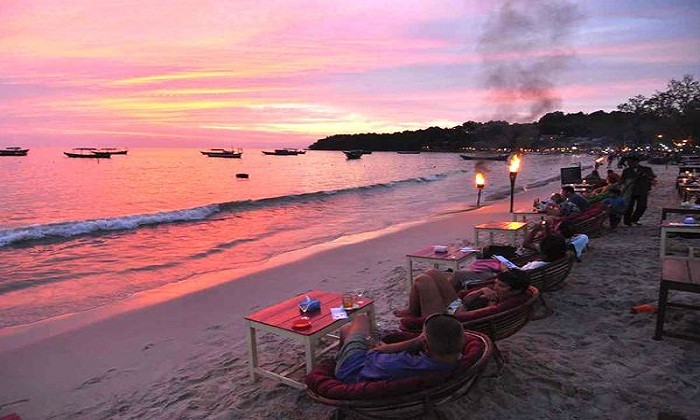
Cambodia: The Kingdom of Cambodia is a constitutional monarchy situated in Southeast Asia and counting a population of more than 13 million people. Most Cambodians are Theravada Buddhists of Khmer extraction, but the country is home also to a substantial number of Cham and small hill tribes. The country borders Thailand to its west, Laos to its north, Vietnam to its east, and the Gulf of Thailand to its south. From the 9th century to the 15th century, Cambodia represented the center of the Khmer Empire, with Angkor as a capital.
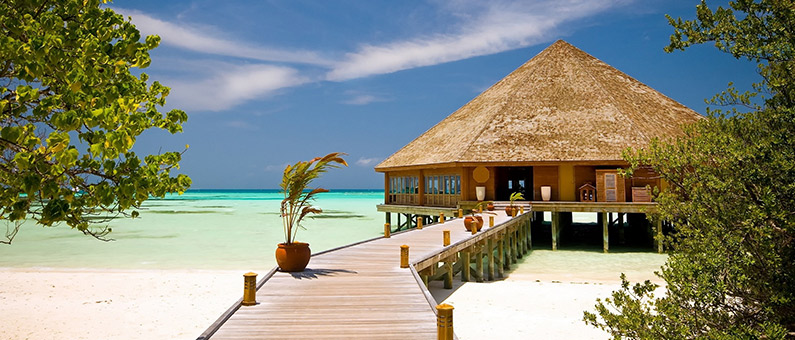
The Angkor Wat, the empire's main spiritual site, is a symbolic reminder of the time when Cambodia was a major powerful influence around most of the Indochinese peninsula, and remains the country's top tourist attraction. From 1863 the country was a protectorate of France, which lasted until 1953, when the country received independence. Cambodia covers an area of about 181,040 square kilometers. It has 443 kilometers of coastline along the Gulf of Thailand.
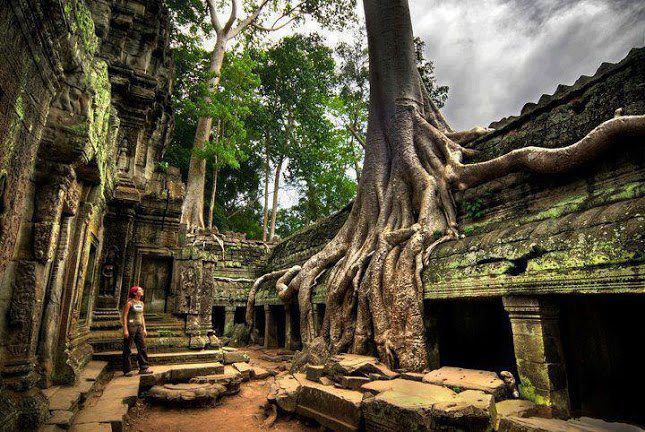
Ta Prohm Temple At Angkor Cambodia
The most distinctive geographical feature are the lacustrine plains formed by the inundations of the Great Lake. It measures about 2 500 square kilometers during the dry season and expands to about 24 000 during the rainy season. This densely populated plain, devoted to wet rice cultivation, is the heart of Cambodia.
Most of the country’s territory lies at elevations of less than 100 meters above the sea level, the exceptions being the Cardamom Mountains (1,813 meters of elevation) and the steep escarpment of the Dângrêk Mountains situated along the border with Thailand's Isan region. The tourism industry is the country's second-greatest source of hard currency in Cambodia after the textile industry.
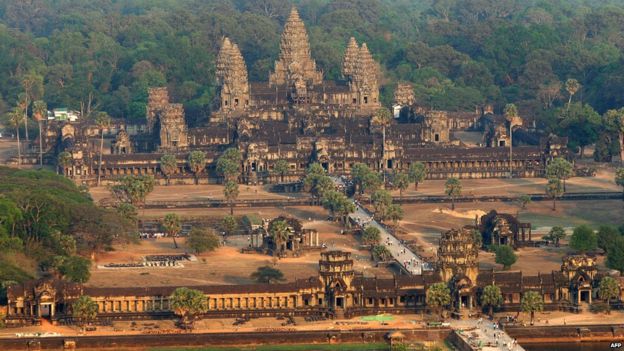
More than 60% of visitors go to Angkor, and most of the remainder to Phnom Penh. Other tourist highlights include Sihanoukville (Cambodia's only port), whits its popular beach, and the region around Kampot, including the Bokor Hill Station. The celebrated temples of Angkor constitute the Cambodia's greatest tourist attraction.
The nearly 100 temples represent now the sacred remains of what was once a much larger administrative and religious center, and were constructed between the 9th and 13th centuries to glorify a number of Khmer kings. The three most splendid temples are Bayon, Ta Prohm and the enormous Angkor Wat.

Most of Angkor was abandoned in the 15th century and it was gradually cloaked by jungle. Efforts were undertaken to clear away the exuberant vegetation which threatened to completely destroy the monuments, and restoration of the temples still undergoes. The Angkor Wat complex is the most exquisite example of Khmer architecture.
Built in the early 12th century for king Suryavarman II as his state temple, it remained a significant spiritual centre for centuries– first Hindu, and afterwards Buddhist. Out of the reach of tourists during the civil war, it has regained worldwide attention after being displayed in the 2001 movie Lara Croft: Tomb Raider. The Bayon is the other highlight of Angkor.
Built in the 13th century as the state temple of the king Jayavarman VII, it was the centre of the then capital and bears 54 towers, each decorated with four smiling faces. The largest and most populous city of Cambodia (about 1 million citizens), Phnom Penh was known in the 1920s as the Pearl of Asia. Renowned for its traditional Khmer and French influenced architecture, it is a major tourist destination in Cambodia, as well as in Indochina as a whole.
The main tourist attractions in Phnom Penh are the Silver Pagoda and the Royal Palace.
They sit side by side on the Sothearos Blvd and, being two separate complexes, are though visited as one. Built in 1866 by the French, the Royal Palace comprises numerous buildings, the Throne hall ranking as the most important. Adjacent to the Throne Hall is a 59 meter high tower. South of it is the Royal Treasury and the Villa of Napoleon III, built in 1866 and given afterwards as a present to Cambodia.
At the northern part of the palace grounds is situated the Silver Pagoda. The original pagoda, constructed in 1866 by King Norodom, was mostly made of wood and, in 1962 was expanded by Sihanouk. It owes its name to the fact that its floor is made of more than 5 000 silver blocks with a total weight of more than 6 tons.
The most important Buddha statue of the temple is, similarly to Bangkok’s royal temple, an Emerald Buddha, which is in this case not made of emerald, but of Baccarat crystal and dates back to the 17th century. On the Museum scene, well worth visiting are the Choeung Ek Genocidal Center- one of the main killing fields of Pol Pot and the Toul Sleng Museum of Genocidal Crime (the infamous prison of the Khmer Rouge), both displaying horrific artifacts from the dark era of Pol Pot, as well as the National Historic Museum.
Cheap Deals On Airline Flights
Experience Ko Chang Water Festival Loi Kathong In Thailand
Tweet
Follow @Charlesfrize