Warsaw: Europe's Hidden Gem
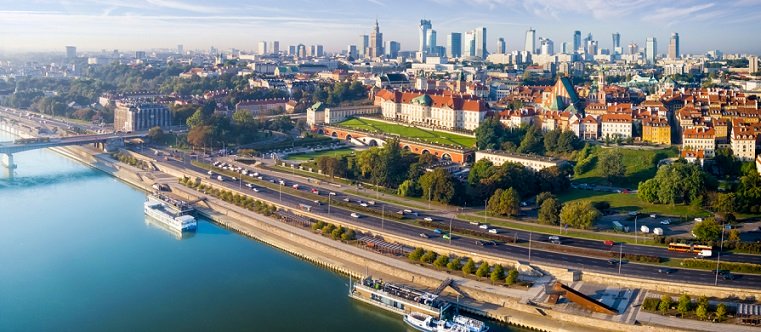
Warsaw: Where History Breathes and the Future Thrives

Krakow Poland Tourism Mediterranean Cruise Bulgarian Culture Argos Croatia Tuscany Margaret Island Olu Deniz Albania Porto Laax Cordoba Spain Andorra Venice Guide Tanzania USA Travel Cyprus Lanzarote Turkey Tourism Vancouver Island Ghana Travel and Tourism Florence Switzerland Tourism Egypt Madrid London Salzburg Italy International Travel Destinations New York Serbia Travel Greece Travel New England Student Travel Traditional Ghanaian Food Varanasi India
Warsaw: Where Ancient History Meets Modern Necessity
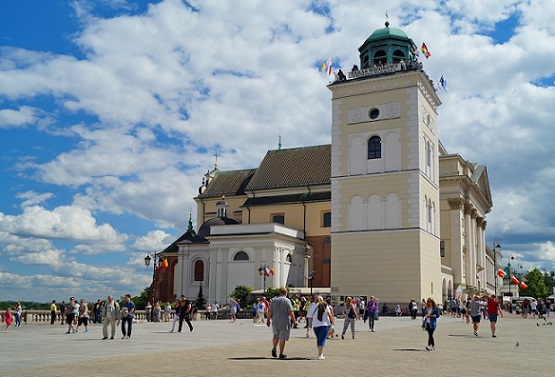
A City Forged in Fire and Reborn in Glass
Warsaw is a city that defies conventional expectations.
Straddling the sparkling Vistula River, this Polish capital is not merely a destination, it is a living testament to resilience, a phoenix that has risen from ashes more times than history should reasonably demand.
While its origins as a small fishing town fortified as a Masovian stronghold in the early 14th century make it a relative fledgling compared to its pre-Roman Polish neighbors, Warsaw's ascent to become the heart of the Poland-Lithuanian Commonwealth and the enduring capital of the Polish nation is nothing short of remarkable.
What makes Warsaw truly extraordinary, however, is not simply its physical presence but the profound weight of what has come and gone within its city limits. No other European city experienced quite as extensive horrors and bombardment during World War II. Over 80 percent of the city was completely razed, including the cherished Old Town and Royal Palace, and nearly 800,000 citizens perished. The Nazis, followed by Russian forces, left behind a landscape of utter devastation that would have broken lesser cities.
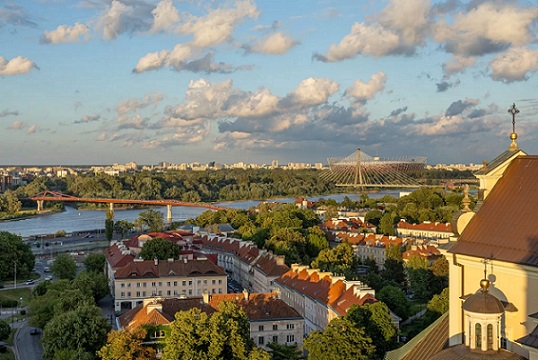
Yet Warsaw refused to stay broken.
The Philosophy of Rebuild, Revive, Reinvent
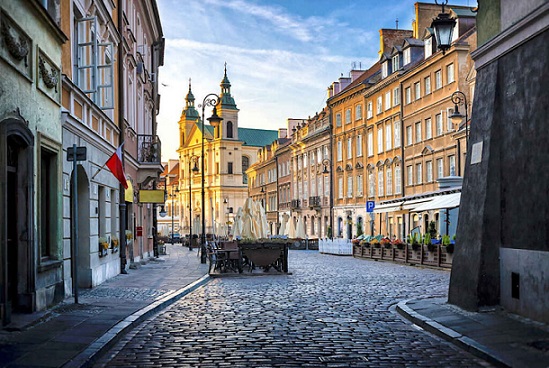
The city's identity is inextricably tied to its capacity for renewal. While many important buildings were meticulously restored after the war, Warsaw has not attempted to simply recreate its past. Instead, it has grasped the modern era of post-communist art and architecture with both hands, creating a fascinating dialogue between memory and ambition. The invaluable history is well documented in immaculately maintained museums and exhibits, while outside, a commitment to present and future life drives the city's working gears.
Travel to Warsaw to marvel at its graceful execution of eclecticism. The visible stratification of decades is embodied by the rotating façades of building structures. Art-Deco and elaborate Modernist office buildings of the post-communist era rub shoulders with giant stone-slab housing complexes from the chilling Communist period, while old Baroque-style manors and museums accent this remarkable amalgamation.
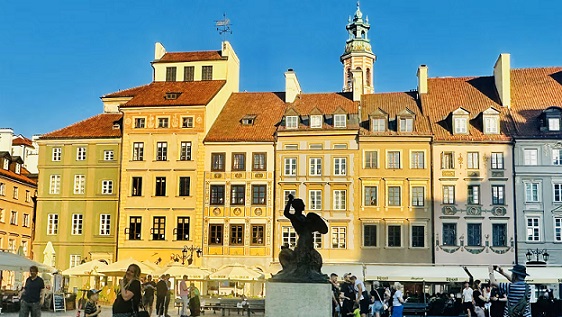
Warsaw Today: A Metropolis Transformed
A Skyline of Ambition
Contemporary Warsaw has become a city of vertical ambition. The Varso Tower, standing at 310 meters, has held the title of the tallest building in the European Union since February 2021, ending the long hegemony of the Palace of Culture and Science over the city's skyline. This architectural triumph, with its observation deck on the 53rd floor offering the highest vantage point in the EU, symbolizes Warsaw's determination to look forward rather than backward.
The city's skyline has transformed dramatically in recent years. Between 2021 and 2025 alone, Warsaw gained ten new skyscrapers in the Wola and Śródmieście districts. Among these, the Bridge Tower, completed in late 2025, represents a new paradigm in Warsaw's architectural philosophy. Standing 174 meters tall with 47,000 square meters of office space, this project seamlessly integrates a contemporary glass tower with the historic Bellona building, a former printing house and protected monument, through a double-height glazed lobby. This "bridge" between past and present preserves the original colonnade and staircase while introducing a panoramic elevator and internal atrium, creating a space that respects history while embracing innovation.
The Bridge Tower also sets new standards for sustainability, becoming the first commercial property in Central and Eastern Europe to receive both SmartScore and WiredScore certifications, with features including vacuum sewer technology that reduces water consumption by up to 75 percent and a Building Energy Management System that optimizes energy use.
A Cultural Renaissance
Warsaw's cultural landscape has undergone its own remarkable transformation. In October 2024, the Museum of Modern Art (Muzeum Sztuki Nowoczesnej) officially opened its doors in the heart of the city, adjacent to the iconic Palace of Culture and Science. Designed by New York architect Thomas Phifer, this striking monochromatic cubic building spans nearly 20,000 square meters across six floors. The opening drew 50,000 visitors in just its first three days, signaling the city's hunger for contemporary cultural expression.
The museum's director, Joanna Mytkowska, described it as "a space for the people of Warsaw, where visions of a vibrant, visionary metropolis come to life," emphasizing that Polish modern art since 1989 is "absolutely extraordinary".
A Thriving Economic Hub
Warsaw has emerged as one of Europe's most attractive investment destinations. According to the EY "European Investment Attractiveness 2025" report, the Polish capital jumped 21 places to rank 5th among Europe's most attractive cities for investors, placing it alongside the continent's largest and most developed metropolises. While foreign direct investment across Europe declined by 7 percent in 2025, Poland saw a 10 percent increase, with 285 investment projects.
This economic vitality is driven by several factors: the reorganization of global supply chains, investments in data centers and new technologies, strong infrastructure support from national and EU funds, and a stable labor market with access to skilled talent. Warsaw's strategic location in Central and Eastern Europe positions it as a natural logistics and operational hub for international companies.
The office market reflects this dynamism, with total leasing volume reaching 794,000 square meters in 2025, a 7 percent increase year-on-year, while the vacancy rate stood at a healthy 9.1 percent.
A City of Neighborhoods
Warsaw's urban development has embraced the "15-minute city" concept, with pioneering projects like Modern Mokotów transforming the former single-purpose office district of Służewiec Przemysłowy, affectionately known as "Mordor", into a mixed-use neighborhood where most everyday needs can be met within a few minutes' walk, bicycle ride, or public transport journey from home.
This project, the first of its kind on such a scale in Warsaw, replaces a 1990s office complex with housing, commercial space, green areas, and public spaces, including a new 1.5-hectare park where a car park once stood. The developer also funded a nearby primary school for 450 pupils. The architects reorganized a quarter laid out according to factory logic, splitting it into smaller building units at a scale comparable to Old Mokotów, one of Warsaw's most liveable districts.
A Nightlife Capital
Warsaw has quietly become one of Europe's most exciting nighttime destinations. The city's nightlife pulsates along the Vistula, where in summer, bars and clubs line up like pearls along the promenade. Hip beach bars by the river offer fairy lights, DJ sets, and views of the PGE National Arena.
In Śródmieście, the central district, fine dining meets unpretentious "milk bars", traditional Bar Mleczny serving hearty pierogi, right next to new bistros offering natural wines and modern interpretations of Polish cuisine. The cocktail scene is equally dynamic, with award-winning establishments like "El Koktel" and the stylish "Woda Ognista" alongside younger bars such as "Kita Koguta" that play with experimental drinks.
Electronic music fans dance the night away in venues like "Jasna 1" and "Smolna," while those seeking a more polished experience can head to rooftop parties at "Level 27." The neighborhood of Śródmieście Południowe, with its classicist-socialist blocks and streets north of Plac Konstytucji, has become a haven for trendy wine bars, cocktail venues, and young creatives.
A Classical Music Tradition Renewed
Warsaw's cultural calendar in 2025 was dominated by the XIX International Fryderyk Chopin Piano Competition, held from October 2 to 23. The competition drew enormous public interest, with long queues forming overnight outside the National Philharmonic for tickets, and passionate debates about interpretations and performances even in public transport. The event was won by American pianist Eric Lu, with Kevin Chen of Canada taking second prize and China's Zitong Wang earning third.
The year also marked a significant transition for the Grand Theatre–National Opera, which began a new chapter under the leadership of renowned set designer and designer Boris Kudlička after nearly two decades under Waldemar Dąbrowski and Mariusz Treliński.
Essential Tips for the Discerning Traveler
When to Visit
The ideal months to experience Warsaw are May through June and September through October, when the weather is pleasant and the city's cultural calendar is in full swing. Summer months bring the city's riverside bars and beach culture to life, while winter transforms Warsaw into a magical, snow-dusted wonderland, albeit with shorter days.
Getting Around
Warsaw boasts an excellent public transportation system, including buses, trams, and a modern metro. The city is also highly walkable, particularly in the central districts. For a unique perspective, consider renting a bicycle, Warsaw has been investing heavily in cycling infrastructure, and the flat terrain makes it an ideal way to explore.
Essential Experiences
- Walk the Memorial Route: Take the Memorial Route to the Struggle and Martyrdom of the Jews 1940-43 through the former Jewish District, passing 16 commemorative granite blocks representing significant people, places, or events. This sobering but essential experience connects you to the city's profound historical memory.
- Visit the Palace of Culture and Science: Just south of the memorial route stands Poland's most iconic, and most controversial, building. This Stalinist-era gift from the Soviet Union in the 1950s remains a striking presence on the skyline, offering observation decks with panoramic views.
- Explore the Royal Palace: Though destroyed per Hitler's orders, the restored Royal Palace in Old Town has been returned to much of its 18th-century splendor, complete with a museum of salvageable works of art.
- Discover Warsaw's Green Spaces: Much of Warsaw's grid-like structure is rife with greenery. Warsaw University hosts a magnificent Botanical Garden, and the south of the city is just the beginning of the enchanting Kabacki Forest.
- Experience the Museum of Modern Art: Located at 103 Marszałkowska Street, this striking new building is a must-visit for contemporary art enthusiasts and anyone interested in Poland's vibrant post-1989 cultural scene.
Practical Considerations
- Language: While English is widely spoken in tourist areas, learning a few Polish phrases will be warmly received.
- Currency: Poland uses the złoty (PLN), not the euro. Credit cards are widely accepted, but carrying some cash is advisable for smaller establishments.
- Local Etiquette: A simple "dziękuję" (thank you) and "proszę" (please) go a long way. Tipping around 10 percent is customary in restaurants.
A City of Contrasts, A City of Hope
Travel to Warsaw to experience all the joys of a big city, but with a uniquely Polish twist. The city is not only the seat of the National Opera and Philharmonic but also pulses with jazz clubs and music bars. Come seek out the nuanced history in Central Europe's staggeringly modern metropolis, a place where the ancient is history and the modern is a necessity, where every glass tower rises from ground that remembers tragedy and triumph in equal measure.
Warsaw does not ask for pity for its wounds. It asks instead for recognition of its extraordinary capacity to heal, to grow, and to thrive. In a world that often seems determined to repeat the mistakes of the past, this city offers a different narrative, one of resilience, reinvention, and the unshakeable belief that tomorrow can be better than yesterday.
Tweet