Taste Ghana: Traditional Recipes and Dishes You Need to Try
The Cultural Significance of Food in Ghanaian Society

Ghana Travel and Tourism Kwame Nkrumah Memorial Park Accra Paris Diet and Nutrition London Wildwood Mole National Park Ghana Avignon New York Rome Restaurants Travel Tips and Guide Tuscany Portugal Zermatt Manchester Italy Serbia Travel North Carolina Florence Madrid Siena Toronto Lake District Munich Cambodia Egypt Kakum National Park Ghana Phuket Private Jet Charter Tanzania Porto
Food Pages On FrizeMedia Sister Platform. Opens In New Window
Japanese Cuisine Sea Scallops Avocado Fruits Honey Mustard Pizza Buffalo Meat Tofu Chocolate Vegetables East Indian Food French Cuisine Greek Souvlaki Fondue Caribbean Food Superfoods
Ghana on a Plate: A Journey Through Street Food, Fruits, and Delicacies
Ghanaian cuisine is far more than sustenance, it is a vibrant expression of cultural identity, community, and history.
From the bustling night markets of Accra to the family compounds of the north, food serves as a unifying yet distinctly regional symbol.
Each dish carries meaning, representing the traditions, values, and life experiences of Ghana's diverse ethnic groups. This guide explores Ghana's rich culinary landscape, covering traditional dishes, street food, tropical fruits, regional delicacies, and the nutritional science behind it all.
Traditional Dishes and Staples
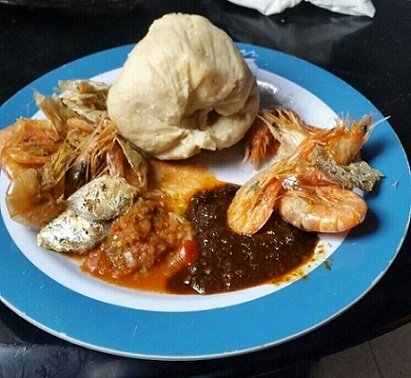
Ghana's culinary diversity reflects a rich cultural mosaic. From Tuo Zaafi (TZ) in the north to Akple among the Ewe, Fufu among the Akans, and Kenkey among the Ga people, food remains a powerful marker of identity. These staple dishes form the foundation of Ghanaian meals and vary significantly in their nutritional profiles.
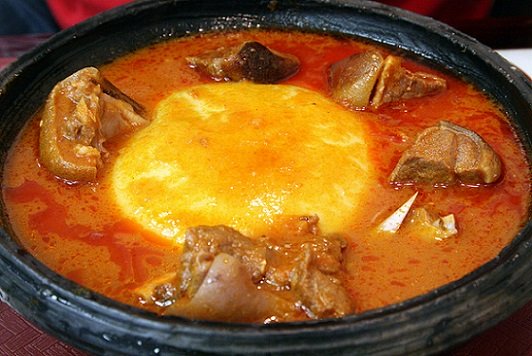
Fufu is perhaps Ghana's most iconic dish. It is made by boiling yam, plantain, cassava, cocoyam, or a combination of these, then pounding them into a smooth, stretchy dough. In the Nkwanta South Municipality, "Yam fufu" is both a staple and a symbol of identity. Nutritionally, fufu is rich in carbohydrates, providing energy for daily activities, and contains dietary fiber and essential minerals that support growth and development. Nutritionists advise balancing the dish with protein to maximize its nutritional benefits.
The glycemic index (GI) of Ghana's staple foods varies considerably, which is important for blood sugar management. A study on local staples found that processed-powdered fufu had the least glycemic response (GI 31), followed by Ga kenkey (GI 41) and locally pounded fufu (GI 55), all classified as low GI. Tuo Zaafi (GI 68) had a medium GI, while banku (GI 73) registered a moderately high GI. Processing methods significantly influence these values; for instance, although kenkey and banku are both maize-based, kenkey has a much lower GI due to fermentation.
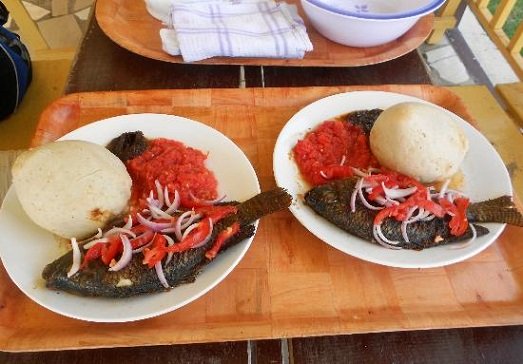
Kenkey and fish is a beloved Ga dish. A serving of kenkey with fish and pepper contains approximately 30–40g of carbohydrates, 20–30g of protein, and 15–20g of fats. Fufu with soup typically contains 40–60g of carbohydrates, 15–25g of protein, and 10–20g of fat.
Ghanaian soups are a major component of traditional meals, and their composite nature makes their calorie and macronutrient composition highly variable. A study on selected composite Ghanaian soups found that carbohydrate content ranged between 1.18–8.43g, protein between 0.34–4.31g, and fat between 0.14–7.78g per 100g of edible portion. Palm nut soup with animal protein had the highest carbohydrate and fibre content, while groundnut soup with chicken had the highest protein content. The large serving sizes often required to meet protein targets suggest these soups should be eaten alongside protein-rich foods to enhance intake.
Jollof rice, a West African classic, is also a Ghanaian favourite. A standard 300g plate contains approximately 426 calories, with 79.5g carbohydrates, 9g protein, and 9.6g fat. Per 100g, it provides 142 kcal, 26.5g carbohydrates, 3g protein, and 3.2g fat.
Street Food: The Heartbeat of Ghanaian Cities
Ghanaian street food is more than just something to eat, it's an experience. The smells, the heat, the shouting vendors, and the quick bites taken by the roadside define everyday life for many Ghanaians. Street foods contribute significantly to nutrient intake; research shows they provide 35% of energy, 43% of vitamin A, 20% of vitamin B12, 30% of zinc, 34% of iron, and 54% of calcium consumed by children.
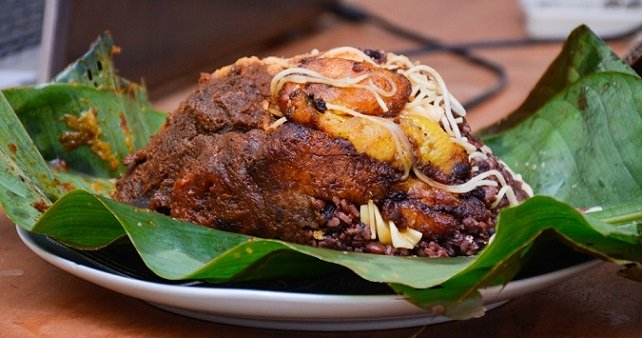
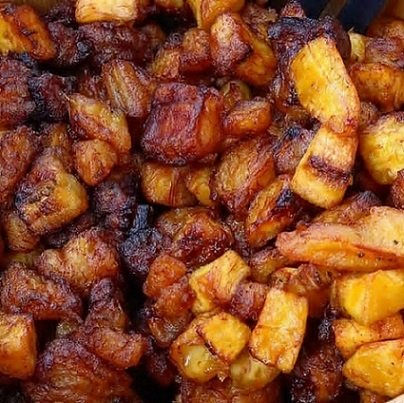
Kelewele is the undisputed star of Ghanaian street food. Made from ripe plantains cut into chunks, heavily seasoned with ginger, pepper, and spices, then fried until golden, it is a popular nighttime snack. A 150g serving contains approximately 323 calories, 48g carbohydrates, 2.3g protein, and 14.3g fat. Per 100g, it provides 215 kcal, 32g carbohydrates, 1.5g protein, and 9.5g fat. Nutritionally, kelewele offers rich carbohydrates and fiber from plantains, along with vitamin C, vitamin A, potassium, and magnesium. The spices, ginger, garlic, cloves, and nutmeg, contribute anti-inflammatory and antioxidant properties.
Brukina is a hearty northern favourite made with soaked millet grains and creamy fermented milk, described as filling and refreshing at the same time. Proximate analysis reveals that brukina products are relatively rich in carbohydrates (38.34%–57.79%) but record relatively low ash content (0.53%–0.88%) and low protein content (2.06%–3.46%).
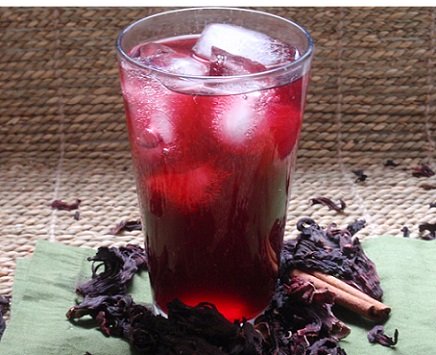
Sobolo (roselle juice) is a deep-red drink brewed from dried hibiscus leaves and spices, served cold and perfect for Ghana's tropical heat. Consumers report various health benefits, including improved blood supply, kidney and liver function, and detoxification.
Other popular street foods include Agbeli Kaklo (cassava fritters), Kulikuli (peanut bars), Nkate Cake (peanut brittle), Poolo (fried coconut dough), Ayigbe Toffee (caramelised coconut candy), Chichinga (spiced grilled meat skewers), Koose (bean cake), and Wagashi (fried cheese fritters popular in northern Ghana).
A landmark study on six popular indigenous Ghanaian snacks, agbelikaklo, daakoa, poolo, bamfo bisi, nkate cake, and adunlee, found that all were energy-dense, ranging from 275.6 to 486.0 kcal per 100g. Nkate cake showed the highest energy density (486.0 kcal/100g), daakoa had the highest protein content (15.08 g/100g), and adunlee had the highest ash content (2.46 g/100g). Protein-rich snacks like daakoa and adunlee demonstrated higher protein content compared to several commercial snack benchmarks, suggesting potential nutritional relevance in populations with marginal protein intake.
Tropical Fruits and Their Nutritional Value
Ghana's tropical climate supports an abundance of fruits, both cultivated and wild. In southern Ghana, fruits are regarded as pleasant refreshments, while in the north, wild fruits are collected during the "hungry season" to supplement dwindling grain supplies.
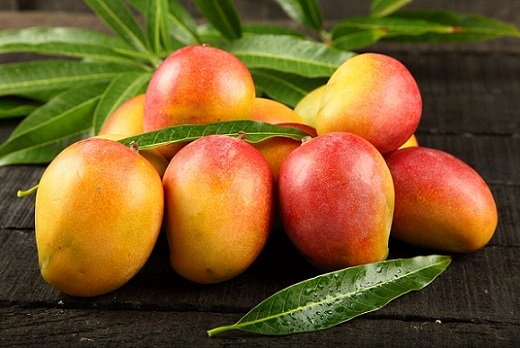
Cultivated fruits in Ghana include banana, orange, grapefruit, lemon, lime, pineapple, pawpaw (papaya), avocado pear, soursop, custard apple, mango, cashew apple, and ackee. Ghana's premium tropical fruits, including mango, pineapple, coconut, papaya, and banana, are in high demand internationally in markets such as Belgium, the United States, and the United Kingdom.
Research on four underutilized edible wild fruits of dietary interest in Ghana, Gardenia erubescens, Sclerocarya birrea, Diospyros mespiliformis, and Balanites aegyptiaca, revealed nutritional values high enough to contribute significantly to human nutrient requirements. Their iron content ranged from 0.34–1.46 mg/100g, zinc from 0.81–2.97 mg/100g, vitamin A from 0.84–2.03 mg/100g, and β-carotene from 64.84–176.89 mg/100g. These nutrient-dense fruits show promise in fighting malnutrition.
Alasa (African Star Fruit) is cultivated particularly in southern Ghana where the climate is favourable for tropical fruit production, while Yoyi (African velvet tamarind) is a tropical native fruit characterized by distinctive pod-like fruits.
Regional Delicacies
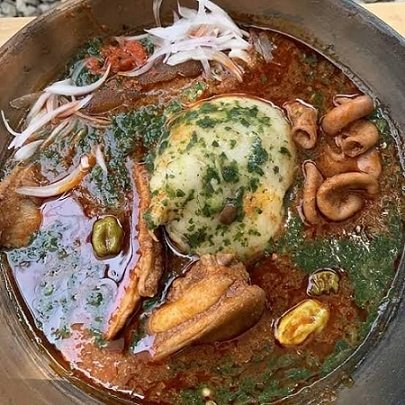
Ghana's regional delicacies reflect the country's ethnic diversity and agricultural heritage. In the Upper West Region, the Dagara culinary tradition boasts indigenous meals such as TZ, "sense" made from beans or Bambara beans, and "kpoglo" made from fried maize flour and Bambara beans.
Simisao is an indigenous delicacy among the Dagaba people, prepared from Bambara beans flour in resemblance of TZ but softer and served hot. It is served with dried okra soup with dried meat. Locals prefer it in the morning due to its ability to sustain a person throughout the day. As one vendor explained, "when you eat it, all you need is water, and it can sustain you for the whole day". Simisao is valued for its nutrients, prepared with pure local ingredients like dawadawa and no artificial spices.
Tubani is a traditional Ghanaian delicacy gaining recognition for its nutritional and cultural value. Often perceived as a simple bean cake, culinary experts and health professionals describe this steamed cowpea-based meal as a rich blend of history, health, and heritage.
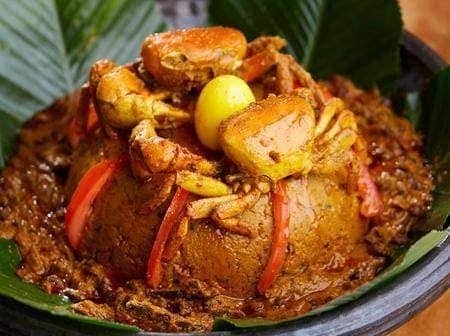
Other regional specialties include Apapransa, a slow-cooked dish utilizing palm nut soup, roasted corn, and local ingredients that has nourished Ghanaians physically and spiritually for generations. Ghana's coastline offers a sustainable source of fish, crabs, sardines, and tilapia packed with omega-3 fatty acids.
Nutritional Overview and Health Considerations
Ghanaian cuisine offers a diverse range of nutritional profiles. Traditional cereal-based fermented meals such as koko, banku, kenkey, and cassava dough provide beneficial probiotics that support digestion and enhance nutrient absorption.
However, nutrition experts caution that frequent consumption of large portions of fufu, kenkey, rice, or yams without corresponding physical activity contributes to gradual weight gain and increases the risk of diet-related diseases. Animal-sourced foods account for about 11% of total caloric intake but provide roughly half of protein intake in typical Ghanaian diets.
Street foods contribute significantly to daily nutrient intake, particularly for lower-income households, where they account for just over 30% of total calorie availability. This underscores the importance of ensuring street food vendors have access to nutrition education and quality ingredients.
Conclusion
Ghanaian food and cuisine represent a rich tapestry of flavours, traditions, and nutritional diversity. From the communal pounding of fufu to the sizzling kelewele sold at night markets, each dish tells a story of heritage and community. Understanding the nutritional profiles of these foods, from the high-protein daakoa snacks to the low-GI kenkey, empowers Ghanaians and food enthusiasts alike to make informed dietary choices while celebrating the country's culinary legacy. As Ghana continues to embrace its indigenous cuisine as a pathway to sustaining cultural identity and pride, the world increasingly recognizes the value of these traditional foods not only for their taste but for their contribution to health and well-being.

Tweet