Florence, Italy: The Complete Travel Guide
Top Things to Do in Florence
Siena Rome Tuscany Zermatt Serbia Travel Avignon London Porto Lake District Rome Restaurants Thailand Palm Springs Vancouver Island Madrid Munich Tanzania Alicante Portugal Edinburgh Manchester San Diego Italy Mole National Park Ghana Santa Monica Paris Tourism Florence Venice Guide Andorra Krakow New York Barcelona Laax
A Day in Florence: A Curated Guide to Art, Coffee, and Wine

Florence rewards the traveller who moves with intention. In a single day, you can trace the arc of the Renaissance inside the Uffizi, stand on a bridge whose shops have held gold since the 16th century, and pause for a cappuccino in a café that has welcomed guests since 1733. The key is not to rush, but to sequence the day well: art when your mind is fresh, walking when the city is golden, and wine when the pace finally slows.
Florence in a Day: From Renaissance Masterpieces to a Glass of Chianti
Morning: Begin Like a Florentine
Italian bars are not the dim, late-night establishments the word might suggest elsewhere. They are neighbourhood cafés, places for a standing espresso, a cappuccino, a brioche, or a light aperitivo. The ritual is quick, social, and deeply embedded in daily life. For a historic start, two names stand out.
Caffè Gilli is the city’s oldest café, founded in 1733 by a Swiss family when Florence was still under the Medici. It moved to its current location on Piazza della Repubblica in the mid-1800s and remains a reference point for Florentines and visitors alike. Caffè Rivoire, founded in 1872, sits directly on Piazza della Signoria with Palazzo Vecchio in view, an unbeatable spot for a hot chocolate or coffee before the museum.
If your priority is wine rather than coffee, Enoteca Alessi (founded in 1952, a stone’s throw from the Duomo) is a historic, family-run wine shop and tasting bar that also serves light bites, useful if you prefer to save your sit-down meal for later.
Practical note: Standing at the bar is cheaper than sitting at a table; this is standard practice across Florence. A cappuccino is a morning drink, ordering one after a meal is considered unusual by locals.
Late Morning: The Uffizi Gallery
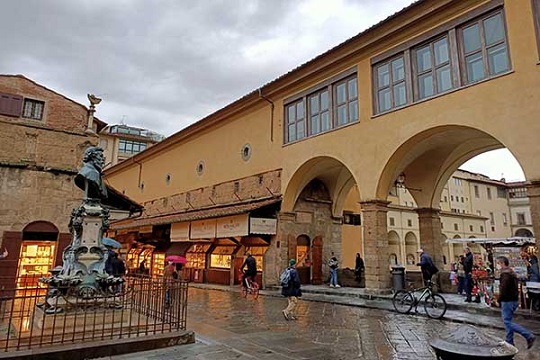
The Uffizi is the reason many travellers come to Florence, and it deserves your freshest hours. The gallery occupies the first and second floors of Giorgio Vasari’s 16th-century building, built as administrative offices (uffizi) for Cosimo I de’ Medici before becoming a public gallery.
What you will see. The collection spans from the Middle Ages to the modern period, with an extraordinary concentration of Renaissance masters. The Botticelli rooms (Sala 10–14) hold The Birth of Venus and Primavera, the two works most visitors come to see. Leonardo da Vinci (Sala 15) is represented by the Annunciation and the unfinished Adoration of the Magi. Michelangelo (Sala 35) has the Doni Tondo, his only surviving panel painting. Caravaggio (Sala 90) closes the chronological journey with Bacchus, Medusa, and the Sacrifice of Isaac. Titian’s Venus of Urbino and Raphael’s Madonna of the Goldfinch are also essential stops.
- Opening hours: Tuesday to Sunday, 8:15 am to 6:30 pm. Closed Mondays, 1 January, and 25 December. The ticket office closes at 5:30 pm.
- Ticket prices: A single named ticket purchased on the day of entry is €25. A single named ticket purchased in advance is €29. The advance price includes the reservation fee. Some third-party sources cite a separate €4 booking fee, but the official site’s advance price of €29 already incorporates that cost.
- Concessions: Reduced tickets are available for eligible visitors (typically EU residents aged 18–25); admission is free for children under 18.
- Booking: Advance timed-entry tickets are strongly recommended. Walk-up access in high season can mean queues of two hours or more. Book directly through the official website, uffizi.firenze.it, to avoid reseller mark-ups.
- Time needed: Allow 3–4 hours for a meaningful visit. The gallery is large, and the Botticelli rooms are the most congested point, if you book the 8:15 am slot, head there first.
Tip: The main entrance is under the portico of the Palazzo degli Uffizi. There is a free cloakroom immediately after the entrances; umbrellas and bulky bags must be left there. A rooftop café offers views over Palazzo Vecchio and the Arno, a good midway pause if you need one.
Midday: Piazza della Signoria and Ponte Vecchio
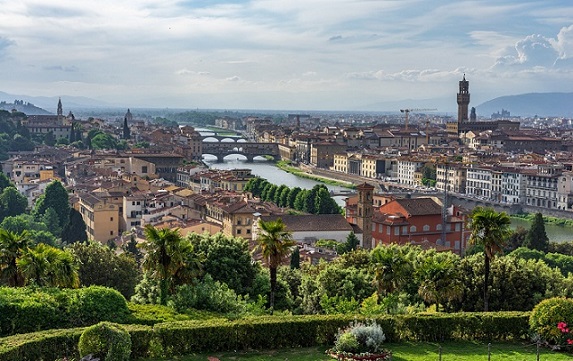
Leaving the Uffizi, you step directly into Piazza della Signoria, the civic heart of Florence. Palazzo Vecchio, the fortress-like town hall, dominates the square. This was the centre of political power in the Renaissance, and its presence still anchors the city’s daily life.
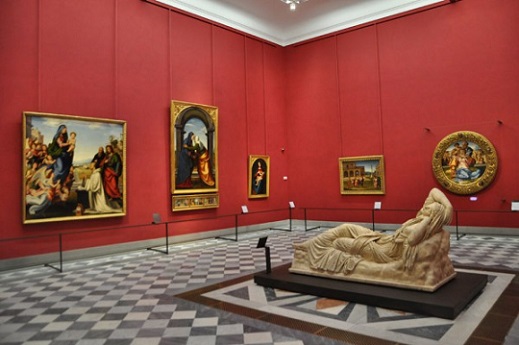
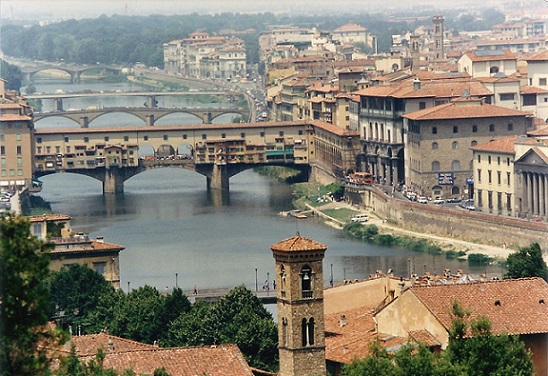
Just a few minutes’ walk away is Ponte Vecchio, the medieval bridge over the Arno. Its shops were not always jewellers. The bridge was built in 1345 as a market-bridge; butchers and fishmongers occupied the shops for centuries, and the waste they produced created unpleasant smells. In 1593, Grand Duke Ferdinando I evicted those trades and installed goldsmiths and silversmiths instead, explicitly forbidding any other trade on the bridge. That decree has held for over four centuries: today, Ponte Vecchio remains home exclusively to small jewellers, some still working in workshops overlooking the street. The Vasari Corridor, the Medici’s private elevated passageway, runs above the shops, connecting Palazzo Vecchio to the Uffizi and Pitti Palace.
Tip: Ponte Vecchio is at its most atmospheric in the late afternoon light, but it is also at its most crowded. If you want photographs without the crush, visit earlier in the day or after the day-trippers have thinned in the evening.
Afternoon: Wine and a Proper Florentine Pause
By mid-afternoon, the museum legs have set in. This is the moment for an enoteca, a wine bar that doubles as a shop, often with a small kitchen.
Enoteca Pitti Gola e Cantina, overlooking Piazza de’ Pitti in the Oltrarno, is a local favourite for its curated Tuscan selection and thoughtful food pairings. It is the kind of place where a glass of Chianti Classico comes with a conversation about the producer, and a plate of truffle pasta can turn a quick stop into an hour. La Divina Enoteca, near Mercato Centrale, is another excellent choice, with an in-house sommelier and a focus on small wineries from across Italy.
The Italian aperitivo hour (roughly 6–8 pm) is a civilised institution: a glass of wine or a cocktail comes with light snacks, and the pace of the city softens. If you have energy left, wander the Oltrarno district across the river, it is quieter, more residential, and full of artisan workshops.
For dinner, avoid the restaurants with photo menus directly on Piazza della Signoria and the immediate Uffizi drag. A short walk into the side streets of the Santa Croce or San Niccolò areas will generally yield better food at fairer prices. Tuscan classics to look for: ribollita (bread and vegetable soup), pappa al pomodoro, bistecca alla fiorentina (for meat-eaters, sold by weight), and a simple plate of crostoni with liver pâté or fresh pecorino.
Where to Stay: A Practical Approach
The most convenient areas for a one-day art-and-food visit are:
- Centro Storico (around the Duomo and Piazza della Signoria): Walkable to everything, but the most expensive and crowded.
- Santa Maria Novella (near the train station): Excellent transport links, slightly lower prices, and still a 15–20 minute walk to the Uffizi.
- Oltrarno (across the Arno): Quieter, more local in character, with good access to Pitti Palace and the Boboli Gardens; 15–25 minutes on foot to the Uffizi.
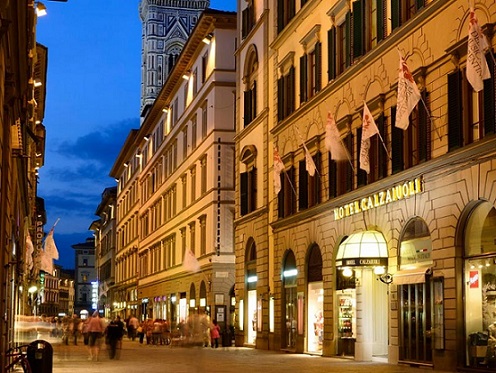
For a clean, central B&B or guesthouse, expect to pay roughly €60–€120 per night for a double in the shoulder season, with prices rising sharply in peak summer. Confirm that the rate includes breakfast, linen, and towels, most Italian B&Bs do, but it is worth checking. Book directly with the property or through a reputable platform with recent reviews, and prioritise a location within a 20-minute walk of the Uffizi over a longer list of amenities. If you are travelling on a tight budget, look at guesthouses and small hotels near Santa Maria Novella rather than the immediate Duomo area; the savings are meaningful and the walk is pleasant.
Tips and Guide: Making the Day Work
Book the Uffizi first, then build the day around it. Choose the earliest available slot (8:15 am) if you want to see the Botticelli rooms before the crowds peak. The official website is the only place to book without a mark-up.
Dress for churches, even if you are only passing through. Shoulders and knees covered are the baseline for entering Florence’s basilicas and duomo. A light scarf in your bag solves most problems.
Carry a refillable water bottle. Florence has public drinking fountains (fontanelle) throughout the centre, and the water is free and safe.
Wear shoes you can walk in. The historic centre is compact but paved in uneven stone; a day of museum floors and bridge crossings adds up.
Eat standing at the bar for breakfast and coffee to keep costs down and to experience the local rhythm. Save the table service for a relaxed lunch or dinner.
Do not try to “do” the Uffizi and the Accademia in the same half-day. Michelangelo’s David at the Accademia is magnificent, but pairing it with the Uffizi in one morning leads to museum fatigue. If both are priorities, split them across two days, or accept that one will be a shorter visit.
Use the late afternoon for the Oltrarno. Cross the river after the Uffizi and Ponte Vecchio, and the atmosphere shifts from monumental to neighbourhood. This is where the day feels less like a checklist and more like a visit.
Florence does not need to be rushed. A day built around one great museum, one historic café, one bridge, and one good glass of wine will leave you with a richer sense of the city than a hurried circuit of ten sights. Start early, book ahead, and let the afternoon slow you down.

The Cathedral Or Duomo Of Florence

Florence Italy: The Cathedral of Santa Maria del Fiore, known as the Duomo, is a crowning jewel of Italian architecture and the defining symbol of Florence's skyline. Its construction spanned more than six centuries, involving generations of master architects, artists, and laborers. Today, this magnificent monument stands not only as a testament to human ingenuity but also as one of the world's most awe-inspiring tourist destinations. With its portals beckoning tens of thousands of travelers daily, the Duomo is an essential stop; no trip to Italy is truly fulfilled without witnessing it.
Beginnings The basic architectural project of Duomo of Florence was designed by Arnolfo di Cambio towards the end of the 13th century. The central feature of this project is the massive cupola, which has eventually become the official symbol for Tuscany. The cupola was designed by Filippo Brunelleschi, the genius of the renaissance architecture.

The wonder The original plan consisted of the octagonal dome of 42 metres span to be built at the east end of the nave. However, this was not accomplished till the 15th century. Filippo Brunelleschi, a goldsmith and sculptor, entered the scene at this point to make statues for the cathedral.

Gradually, his interest extended to the building and he suggested a daring proposal in 1415 to build the dome without supporting form work. The principle behind this was, built in horizontal layers, the stability is enhanced multifold and the construction would not require timber form work support. The construction was carried out under Brunelleschi's supervision between 1420 and 1436, consisting of two domes, the inner one spanning the diameter and an outer parallel to protect from weather and provide a majestic external elevation.

Additions and embellishments Between the period of 1867-87, Emilio de Fabris executed the modern facade of the cathedral, which replaced the one that was destroyed at the end of the 16th century. The Central Museum in the cathedral displays the statues from the former façade and campanile besides the manuscripts in the cathedral’s possession. The endeavour launched in the 13th century came to completion only in the 19th century with the construction of a facade.
Through out the progress over the six centuries, certain startling additions embellished the structure ranging from marble flooring of the entire construction, construction of two sacristies, sculptures and frescos and the portrayal of the Last Judgment in the cupola. All these wonderful and amazing features put together make the accomplishment a feast for the eyes of the visitors which open wide with awe.

Tourist’s Tips Most of the attractions of the town are indoor and suitable to visit during any time of the year. However, tourists throng in great numbers in summer. For better guidance and all necessary information, visit the Tourist Information Office opposite to the station in the first instance. Since many museums are open only in the mornings and several close down for two days in a week, it is ideal to make an advance planning. Entry to every historical place is charged heavily.
Be ready for it and always carry your identity proof to avail some concessions available. Advance ticket booking will save a lot of time in queues as well would help you plan better. Direct online booking facility is available. However, Tourist agencies would be able to help with a nominal additional charge over the actual costs. To explore the geography of the town and to feel the city, one of the best ways is to travel around the city in a city tourist bus, sitting in the open top deck.





Ayers Rock - Australia's Mystery In The Desert
Canada - Banff And Lake Louise
Tweet
Follow @Charlesfrize